

09-30-2026
The Human Part Is Still the Hard Part: Key Learnings from The Human Part Is Still the Hard Part
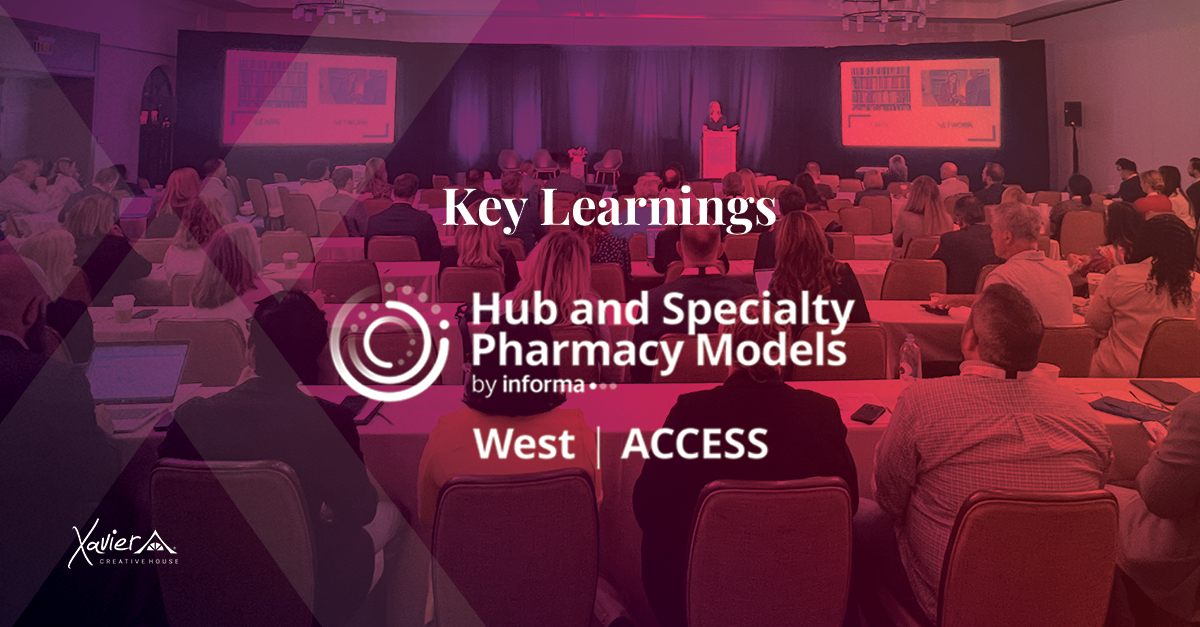
Patient support leaders from manufacturers, hubs, foundations, payers, and technology partners spent 2 days in La Jolla working through one shared question, which is how to get patients onto therapy faster and keep them there while the regulatory ground keeps moving.
What we’re watching
We heard 3 currents often enough across the 2 days to think they’ll shape patient support budgets over the next 2 years.
-
-
- Regulatory enforcement is moving to the states, which changes who a program has to satisfy and how quickly
-
-
-
- Pricing reform is arriving in layers, so provider economics and patient cost-sharing will keep moving
-
-
-
- AI and hybrid hub models are creating real efficiency while adding coordination work, because more moving parts means more places for a program’s communications to fall out of sync
-
Give AI a defined lane
Many sessions mentioned AI. Almost none were about the technology.
The teams furthest along were specific about where it earns a place. Speed-to-therapy acceleration, prior authorization completeness checks, approval probability scoring, and reading faxes that arrive barely legible and turning them into structured records with a confidence score attached. Human reviewers keep approval authority in all of it, which is what makes the efficiency usable.
The bottleneck is connectivity. Hubs, specialty pharmacies, and assistance programs still run as disconnected systems, and that creates operational delays. Compliance firewalls hold here, because unified visibility doesn’t require merged data, and enterprise agreements and signed BAAs stay non-negotiable for anything touching PHI.
The more interesting use is diagnostic. Conversation and workflow data can surface friction that standard KPIs never show, and it can challenge what a team assumes about why patients stall. The barrier a program has been solving for isn’t always the one stopping people.
One speaker described the split as AI illuminating and accelerating while humans interpret, decide, and care.
Payers are running the same technology. Denials now arrive in seconds by AI rejection while a manual appeal takes hours, and payer criteria can lag behind clinical guidelines that update continuously. Speed on one side of the table and not the other becomes its own access problem.
Treat friction as a design challenge
Access has always been an HCP problem, because the burden falls on the practice. Missing documentation is the leading avoidable cause of denial, and a case that enters the appeal cycle delays therapy start by weeks. Appeals work better when they answer the specific denial reason cited. Restating why the patient needs the therapy doesn’t move it.
Plan-specific nuance is where training most often falls short, and coverage needs to reach from the front desk through lab staff, with backup coordinators trained for turnover. Cadence is the other piece. When a hub and a specialty pharmacy each call every other day, the clinic fields duplicate calls daily and neither partner knows it.
Several speakers raised the same opportunity, which is bringing patients into a process they’re currently outside of. Patients are rarely part of prior authorization at all, so the person with the most at stake has the least visibility into where their case stands. Changing that is a communications problem before it’s an operational one.
Medical benefits carry different stakes than pharmacy benefits. A pharmacy-side failure costs a patient, and a medical-side failure can cost a practice and everyone in it. Approval still rarely confirms an infusion happened.
Build for a moving regulatory landscape
State attorneys general are increasingly leading healthcare enforcement, with taxpayer-funded programs drawing the most attention. Nurse educators compensated or trained like sales staff came up as a recognized red flag, which makes clean separation between commercial, medical affairs, and advocacy essential.
The coverage landscape is where the real apprehension sat. Shifts in Medicare and Medicaid eligibility carry significant downstream consequences for assistance programs, and anticipated changes would push more patients toward them at the same moment those programs are under scrutiny. Policymakers are also moving to limit direct-to-consumer promotion, which hits brands with heavy commercial investment hard and makes lower-cost acquisition channels urgent.
Oncology is getting harder. Specialty and limited-distribution models concentrate complexity, and HCPs in those spaces are carrying more of it than before.
Consent is evolving and deserves attention now. The direction of travel is plain language and opt-in, with programs stating clearly that support isn’t required to receive therapy. Collect only the minimum data the operation needs, keep it separate from anything marketing or ROI-related, and hold vendors to the same standard.
Increase patient acquisition
Awareness is the weak link.
Pharma spends roughly $5 billion a year on patient support programs, and only about 3% of eligible patients enroll. We’ve been saying that number out loud for a while, including in our own PSP work and webinar, and it came up repeatedly in La Jolla.
What the sessions added was the practical response. Treat natural touchpoints as invitations to enroll. The prescription. The first call to the pharmacy. The point where a patient is already being handed information and could just as easily be handed the thing that helps them afford it.
There was also a useful reframe on how programs make their case internally. Lead with the story and let the data support it, and show value through penetration, service utilization, fills per year, and coverage migration. ROI framing lands less well with the people holding the budget.
Reorganize around what you hear
Patients stall because they don’t know what comes next, and conversation analysis in one program surfaced health literacy gaps that physician education had never addressed.
The broader point was about how patient voice is used. Most programs use it to confirm what they already believe. Used properly, it tests assumptions, and it can show that the real source of delay or abandonment sits somewhere other than where operational metrics point, which lets a team move resources toward the actual barrier.
Getting that to work at the leadership level takes 2 supports. Compliance and legal contribute more during ideation than during final review, through a standing forum where anyone can bring a topic. And insight has to be framed as an outcome, because the same findings presented as retention and adherence gains got funded where the same findings presented as interesting data did not. C-suite audiences buy a business case.
Insights without action are just observations.
Support starts before launch
Vendors and agency partners should be in the room early enough to challenge assumptions instead of executing a finished plan. Several leaders said they select partners for adaptability as much as capability, because forecasts and access conditions will change. What matters is whether a partner can flex staffing, workflows, and service models when real-world conditions differ from the launch deck.
Hypercare works better as permanent monitoring than as a window that closes a few months in. And support keeps widening. Caregivers and families are now part of program design, and site-of-care shifts like home infusion are creating requirements that didn’t exist a few years ago.
The programs that hold up are built to evolve. Services that made sense during access ramp-up become duplicative once coverage matures, and periodic ecosystem reviews are how teams decide what to expand, what to consolidate, and what to retire.
What we took home
We came back with a list of things to pressure-test against our own work.
The conditions aren’t going to simplify. Policy will keep moving, coverage will keep shifting, and the technology will keep getting better at the narrow things it’s good at. What we heard from the teams doing this well is that they’re treating communication as part of the program design itself, planned alongside the operational build instead of added once the workflows are set.
That’s the work we care about most, and it’s why we were in the room.